
Quick answer: A portable inverter generator in the 2,000- to 3,000-running-watt class can usually support one modern refrigerator or freezer plus a modest group of lights and electronics, provided its surge capacity can start the appliance compressor. If you also want to run a microwave, sump pump, furnace blower, second refrigerator, or other motor load, a 3,000- to 4,000-running-watt model gives you more useful headroom. Always size from the appliance nameplate or a watt meter—not from an internet average.
Safety before shopping: Never run a fuel-burning generator inside a home, garage, basement, shed, porch, or partially enclosed area. The CDC and CPSC advise operating it outdoors at least 20 feet from the home, with exhaust directed away from doors, windows, and vents, and using working battery-backed CO alarms.
Affiliate disclosure: Generator Square may earn a commission from qualifying Amazon purchases made through links on this page, at no additional cost to you. Product specifications below come from current manufacturer or retailer listings; we have not claimed hands-on testing.
Why refrigerators are harder to size than their running watts suggest
A refrigerator does not draw the same amount of power every second. After the thermostat calls for cooling, the compressor needs a short burst of power to start. That momentary demand—often called starting, surge, or locked-rotor demand—can be several times the appliance's normal running draw. A generator may therefore look large enough on paper but still overload when the compressor starts while other equipment is already running.
Begin with the label inside or behind the appliance. If it lists volts and amps rather than watts, multiply volts by amps for a conservative apparent-power estimate, then check the manual for compressor-starting requirements. A plug-in watt meter can show typical running consumption, but many inexpensive meters do not capture a very brief startup peak. When the information is unclear, ask the appliance manufacturer or a qualified electrician.
Keep the two generator numbers separate:
- Running watts are what the generator can supply continuously.
- Starting watts are available briefly to start compressors, pumps, and other motors.
Our broader portable inverter generator wattage guide explains these ratings and shows how to build a complete load list.
A practical sizing method
- List only essential loads. Include the refrigerator, freezer, a few lights, internet equipment, medical devices, and anything else that truly must run.
- Record continuous demand. Use each device's nameplate, manual, or measured running watts.
- Identify the largest startup load. Usually only one motor needs to start at a time, but simultaneous starts can happen.
- Add headroom. Avoid planning to operate continuously at the generator's maximum rating. Extra capacity makes compressor starts and small load changes easier to manage.
- Check outlets and connection method. Wattage alone does not guarantee that a model has the receptacle, voltage, or current rating your plan requires.
For example, suppose the refrigerator and freezer together draw 450 watts while running, essential lights and networking equipment add 150 watts, and the larger compressor needs a brief 1,600-watt start. The continuous total is modest, but the generator must handle the compressor surge without already being heavily loaded. A 2,000-class inverter may work if the verified ratings fit; a 3,000-class model provides room for more simultaneous loads. This example is only a method—not a universal appliance specification.
Generator size by outage plan
| Outage plan | Typical generator class to investigate | Main sizing check |
|---|---|---|
| One refrigerator, lights, phone charging | About 2,000–2,500 starting watts | Verify compressor startup demand and continuous rating |
| Refrigerator plus separate freezer and electronics | About 2,500–3,600 starting watts | Stagger compressor starts and preserve headroom |
| Cold storage plus microwave, furnace blower, or pump | About 3,600–5,000 starting watts or more | Calculate every motor surge and confirm the connection plan |
These ranges are shopping starting points, not guarantees. Larger is not always better: excess capacity usually means more weight, cost, and fuel consumption. The best choice covers the verified load with sensible reserve. For a full-house strategy, also read can a portable inverter generator power a house?
Four current inverter generators to compare
The following models represent four useful capacity levels. We selected products that currently have enabled U.S. Amazon offers in the store data. We do not display prices because Amazon price and availability can change.

Honda EU2200i: compact gasoline option
Best fit: A carefully managed refrigerator-first load plan where portability and lower sound output matter.
- Manufacturer listing: 2,200-watt class, gasoline powered
- Listed operating sound range: 48–57 dB(A)
- Bluetooth monitoring and a three-year residential warranty are listed
Check the exact EU2200i version and California availability before ordering.
View Honda EU2200i on Amazon →
Champion 2500-Watt Dual Fuel: flexible fuel choice
Best fit: One refrigerator or freezer with a small essentials load when propane storage flexibility is valuable.
- Listing: 2,500 starting / 1,850 running watts on gasoline
- Listing: 1,665 running watts on propane
- CO Shield shutoff and parallel capability are listed
Propane output is lower than gasoline output, so size from the fuel you expect to use.
View Champion 2500W on Amazon →
WEN DF360iX: room for two cold-storage appliances
Best fit: A refrigerator-plus-freezer plan or an RV-ready setup requiring more headroom.
- Gasoline listing: 3,600 surge / 2,900 rated watts
- Propane listing: 3,500 surge / 2,600 rated watts
- TT-30R outlet, fuel shutoff, and CO Watchdog are listed
Confirm that the receptacles and extension-cord plan match your appliances.
View WEN DF360iX on Amazon →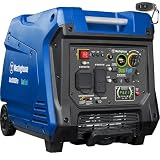
Westinghouse 5000W Dual Fuel: broader essentials plan
Best fit: Multiple refrigeration loads plus selected household essentials, after a complete load calculation.
- Listing: 5,000 peak / 3,900 rated watts
- Gasoline or propane operation and less than 3% THD are listed
- TT-30R, household and USB outlets plus CO shutdown are listed
This is heavier capacity; confirm that you need it rather than paying for unused output.
View Westinghouse 5000W on Amazon →To browse models by use case, compare our inverter generators for home backup and dual-fuel inverter generators.
How to run a refrigerator safely during an outage
Place the generator correctly
Operate it outdoors, at least 20 feet from the home, with the exhaust facing away from all structures and openings. Never assume an open garage door, fan, porch, or CO-shutoff feature makes indoor or near-building operation safe. Install and test CO alarms on every level and outside sleeping areas.
Use the right electrical connection
For an individual refrigerator, use a heavy-duty, outdoor-rated extension cord sized for the load and distance, with intact grounding and weather protection as the manuals require. Do not connect a generator to a wall receptacle. Backfeeding can electrocute utility workers and damage equipment. Supplying household circuits requires a properly installed transfer switch or interlock and an inlet suited to the generator; consult a licensed electrician and local requirements.
Start loads in stages
Start the generator with loads disconnected and follow its manual. Connect the refrigerator first, allow the compressor to stabilize, then add other equipment one item at a time while watching the generator's load display or overload indicator. Avoid starting a freezer, pump, and microwave simultaneously. Turn off nonessential loads before a known motor needs to restart.
Keep the refrigerator cold efficiently
Keep doors closed. FoodSafety.gov says an unopened refrigerator keeps food safe for about four hours; a full freezer can hold temperature for about 48 hours and a half-full freezer for about 24 hours. A refrigerator thermometer helps you confirm 40°F (4°C) or below rather than guessing. Generator operation does not reverse unsafe warming that already occurred.
Plan fuel and maintenance before the storm
Store fuel only in approved containers and outside living areas, following local rules. Shut the generator down and let it cool before refueling. Test the unit periodically, keep oil and maintenance supplies available, and follow the service schedule. Our inverter generator maintenance guide provides a practical checklist.
Frequently asked questions
Will a 2,000-watt inverter generator run a refrigerator?
It often can, but the model's continuous and surge ratings must exceed the refrigerator's verified running and startup demand plus any other connected loads. “2,000 watts” may describe peak rather than continuous output, so read both ratings.
Can I run a refrigerator and freezer at the same time?
Yes, if their combined running demand and the larger startup event stay within the generator ratings. Because compressors can restart without warning, leave reserve and stagger initial connections. A 2,500- to 3,600-watt class inverter is a common range to investigate, but appliance data decides the answer.
Is an inverter generator better for a refrigerator?
An inverter generator can be a good match because it usually provides stable power and adjusts engine speed with load, which may reduce fuel use and sound at partial load. It is not automatically large enough or safe; sizing, placement, cords, grounding, and transfer equipment still matter.
Should I use gasoline or propane?
Gasoline commonly provides the generator's highest rated output. Propane stores differently and can simplify occasional backup planning, but dual-fuel generators usually produce fewer watts on propane. Compare the separate fuel ratings and choose based on required load, local storage rules, and realistic fuel availability.
Can I plug the generator into a household outlet?
No. Never “backfeed” through a wall outlet. Use properly rated cords for individual appliances or have a licensed electrician install approved transfer equipment for household circuits.
Bottom line
For one refrigerator and a few small essentials, start your comparison around the 2,000- to 2,500-watt inverter class. For a refrigerator, separate freezer, and more household flexibility, investigate roughly 3,000 to 4,000 running watts. Move higher only when a verified load calculation justifies it. The correct generator is the smallest model that safely handles continuous demand, the largest realistic motor start, and practical reserve—with the right outlets and connection method.


